
By MyAutoResource Editorial Team · Reviewed by Steven Sun · 5 min read · Updated July 13, 2026
- On a $32,000 car at a 7.5% APR over 60 months, going from $0 down to 20% down ($6,400) cuts total interest by about $1,295 and drops the monthly payment from $641 to $513.
- Interest is charged only on the amount you finance, so every dollar you put down is a dollar you never pay interest on.
- A small down payment on a long loan is the fastest way to end up “underwater,” owing more than the car is worth.
- The Federal Reserve publishes current national auto loan rates each month, so you can check whether a dealer’s APR is fair before you sign.
Marcus had $6,400 saved and a $32,000 SUV picked out. The finance manager told him the down payment was “optional” and pushed a zero-down deal so he could keep his cash free. Putting all $6,400 down would have saved him roughly $1,300 in interest and trimmed his payment by $128 a month. The down payment is the one number the finance office treats as a formality, and it is quietly one of the most powerful levers you have.
How a down payment changes the loan, in real dollars
Your down payment lowers the amount you finance, which lenders call the principal. Interest is charged on that principal, not on the car’s sticker price. The APR, or annual percentage rate, is the yearly cost of borrowing expressed as a percentage. It stays the same, but it now applies to a smaller number.
The table below runs the same $32,000 car at a 7.5% APR over a 60-month term, changing only the down payment.
| Down payment | Amount financed | Monthly payment | Total interest | Total cost of car |
|---|---|---|---|---|
| $0 (0%) | $32,000 | $641 | $6,473 | $38,473 |
| $1,600 (5%) | $30,400 | $609 | $6,149 | $38,149 |
| $3,200 (10%) | $28,800 | $577 | $5,826 | $37,826 |
| $6,400 (20%) | $25,600 | $513 | $5,178 | $37,178 |
The jump from zero down to 20% down saves $1,295 in interest and cuts $128 off every monthly payment for five years, all for changing one line on the contract.
Why the finance office downplays your down payment
Here is the part they do not volunteer. The more you finance, the more interest the lender collects, and the dealer often earns a slice of that financing too. A larger loan is more profitable than a smaller one. So when someone calls the down payment optional, they are technically right and financially conflicted.
A low down payment also raises your loan-to-value ratio, or LTV. That is the size of your loan compared with what the car is worth. Because new cars lose value fast early on, financing almost the whole price can leave your loan larger than the car for a long stretch. That is called being underwater, and it becomes your problem the moment you try to sell, trade, or replace a totaled car.
How much should you actually put down?
The old rule of thumb is 20% down on a new car and 10% on a used one. The Consumer Financial Protection Bureau frames the goal more usefully: put down enough that you are not borrowing more than the car is worth. That is what keeps you out of negative equity.
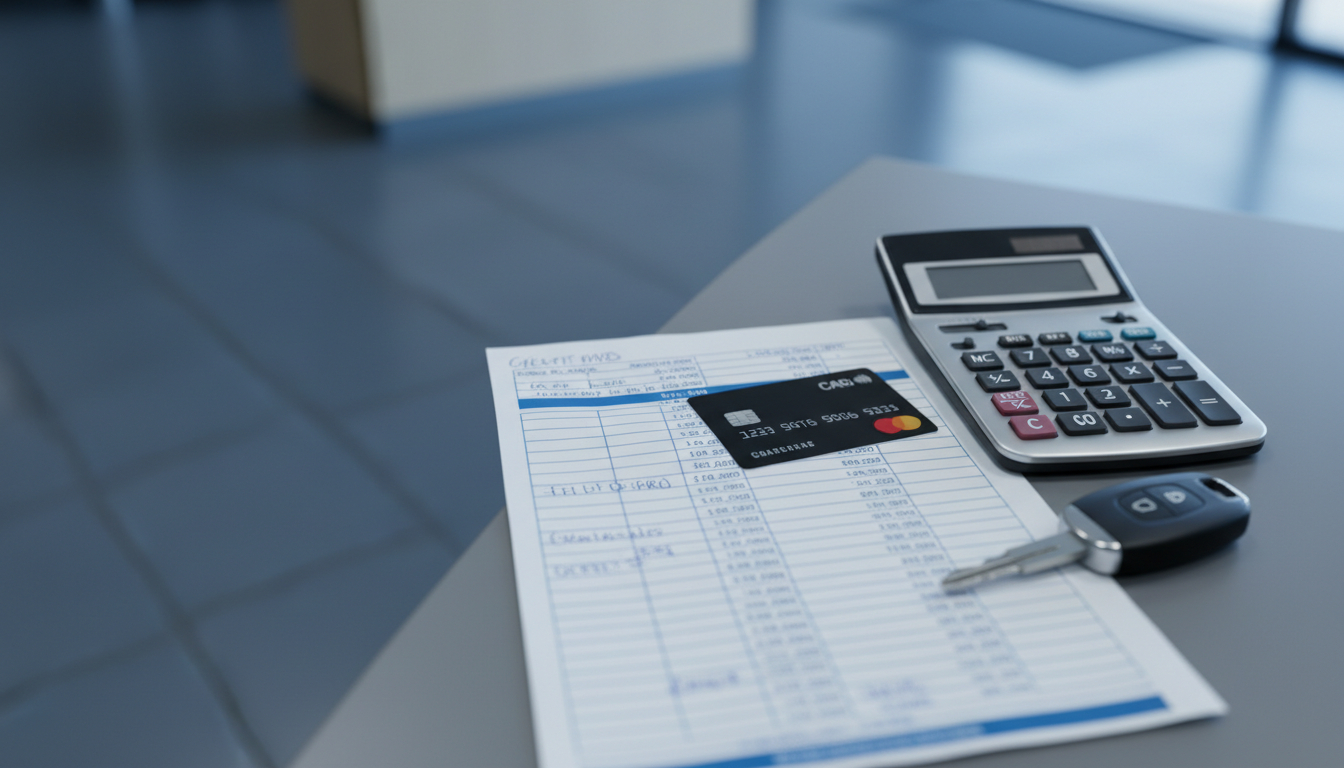
Do not drain your emergency fund to hit 20%. A car you cannot insure or repair is not a bargain. Put down what still leaves a cushion in the bank, and treat the down payment as one line item inside a full car loan budget that also covers insurance, maintenance, and fuel. Even 10% down, as the table shows, saves you $647 in interest over zero down and knocks $64 off the monthly payment. The down payment is only one lever, and our roundup of other ways to save money on your auto loan covers what else is worth stacking on top of it.
Before you sign, check the rate too. The Federal Reserve’s G.19 report lists the current national average auto loan rate each month. If the dealer’s APR is well above that average and your credit is solid, you have room to push back. And knowing how much loan your budget can carry before you walk in keeps the conversation on your terms.
When a smaller down payment can make sense
There are honest exceptions. A genuine 0% APR promotion means financing more costs nothing in interest, so keeping cash on hand can be smarter. And if the choice is a smaller down payment or skipping insurance, protect the cushion. The real trap is not a small down payment by itself. It is a small down payment stacked on a long term, which is how a 72- or 84-month loan quietly balloons your total cost. Pair a reasonable down payment with the shortest term your budget can handle.
Frequently asked questions
Does a bigger down payment lower my interest rate? Not directly. The APR is set by your credit and the market. But a bigger down payment lowers the balance that rate applies to, so you pay less total interest even at the same rate. A lower loan-to-value ratio can also help you qualify for a lender’s better rate tier.
Is it better to put money down or keep it and pay the loan off faster? Down payment money and extra principal payments both cut interest, but a down payment does it from day one on every dollar. If your loan has no prepayment penalty, and most auto loans do not, either approach helps. Putting it down up front also keeps you out of negative equity sooner.
How much down payment do I need to avoid being underwater? Enough that your loan is not larger than the car’s value. Because new cars depreciate quickly early on, roughly 20% down on a new car usually keeps you above water. On a used car, which has already taken its steepest depreciation, 10% often does it.
Can I still get approved with zero down? Often yes, especially with good credit. Approval is not the question. The question is total cost and risk. Zero down means a larger loan, more interest, and a longer stretch of owing more than the car is worth.