

6 min read · Last updated June 29, 2026
- About 78% of dealer-arranged auto loans carry a marked-up interest rate, averaging 1.13 percentage points above what the lender actually approved (MIT, 2023).
- Dealers can legally raise your rate by 2 to 3 points and are not required to tell you they did it.
- On a $32,000 loan, a 2-point markup costs roughly $1,900 in extra interest over six years.
- Two moves cut the markup: ask whether you are seeing the buy rate or the sell rate, and walk in with a pre-approval from your own bank or credit union.
In this article
- What the dealer’s “buy rate” really is
- How much the markup actually costs you
- The one question that surfaces the buy rate
- Bring a pre-approval and turn it into a wedge
- If you already signed, refinancing is your second shot
- FAQ
Marcus sat down in the finance office at 6:40 p.m. with a $32,000 loan ready to sign. The salesman had quoted him “around 7 percent.” What Marcus never found out that night: the lender had approved him at 5 percent. The dealer quietly added two points, and over a six-year term that markup would cost him about $1,900 in extra interest.
This happens to most people who finance at the dealership. They negotiate hard on the car price, then hand all of that savings back in the finance office without knowing it.
What the dealer’s “buy rate” really is
When you apply for financing through a dealership, the dealer sends your application to several lenders. Each lender that approves you sends back a rate. That rate is called the buy rate. In plain terms, it is the lowest rate the lender will accept on your loan.
The dealer does not have to pass that rate along to you. They are allowed to add a markup and quote you a higher number. That higher number is called the sell rate. The difference between the two is the dealer’s profit, and the industry name for it is dealer reserve.
Here is the part most buyers never hear. About 78% of dealer-arranged loans carry a marked-up rate, according to a 2023 analysis by the Massachusetts Institute of Technology. The average markup is 1.13 percentage points. Lenders typically cap the markup at 2 to 3 points, depending on state law.
Marking up your rate is not illegal. The dealer is also not required to tell you it happened. That combination is exactly why the markup survives. It only works on people who do not know to look for it.
How much the markup actually costs you
A point or two sounds small. The dollars are not. The table below shows what a 2-point markup costs across three common loan sizes on a 72-month term.
| Loan amount | Buy rate (approved) | Sell rate (marked up 2 pts) | Extra interest over 6 years |
|---|---|---|---|
| $20,000 | 5% | 7% | about $1,200 |
| $32,000 | 5% | 7% | about $1,900 |
| $45,000 | 5% | 7% | about $2,700 |
That $1,900 on Marcus’s loan is real money. It is roughly three monthly car payments, gone, in exchange for nothing you can see or use. And the markup compounds with everything else the finance office sells you that night, because each add-on rolled into the loan also accrues interest at the marked-up rate.
The damage is worse when budgets are already stretched. One 2026 report found many Americans are spending up to 45% of their annual income on auto loans. If you are in that group, a hidden 2-point markup is not a minor annoyance. It is the difference between a payment you can carry and one you cannot.
The one question that surfaces the buy rate
You do not need to be an expert to break the markup. You need one sentence, asked calmly, before you sign anything.
Ask the finance manager directly: “Is this the buy rate the lender quoted you, or the sell rate?”
That question does two things. It tells the finance manager you know the difference. And it forces a choice: either confirm the rate is unmarked, or explain the gap. You can follow up with, “Can you show me the lender’s approval?” Dealers receive an approval document from each lender that lists the actual terms. Asking to see it is reasonable, and a finance office that refuses is telling you something.
Do not accept “this is the best we can do” as an answer. That phrase describes the dealer’s profit goal, not your approved rate. Keep the conversation on the buy rate until you get a real number.
Bring a pre-approval and turn it into a wedge
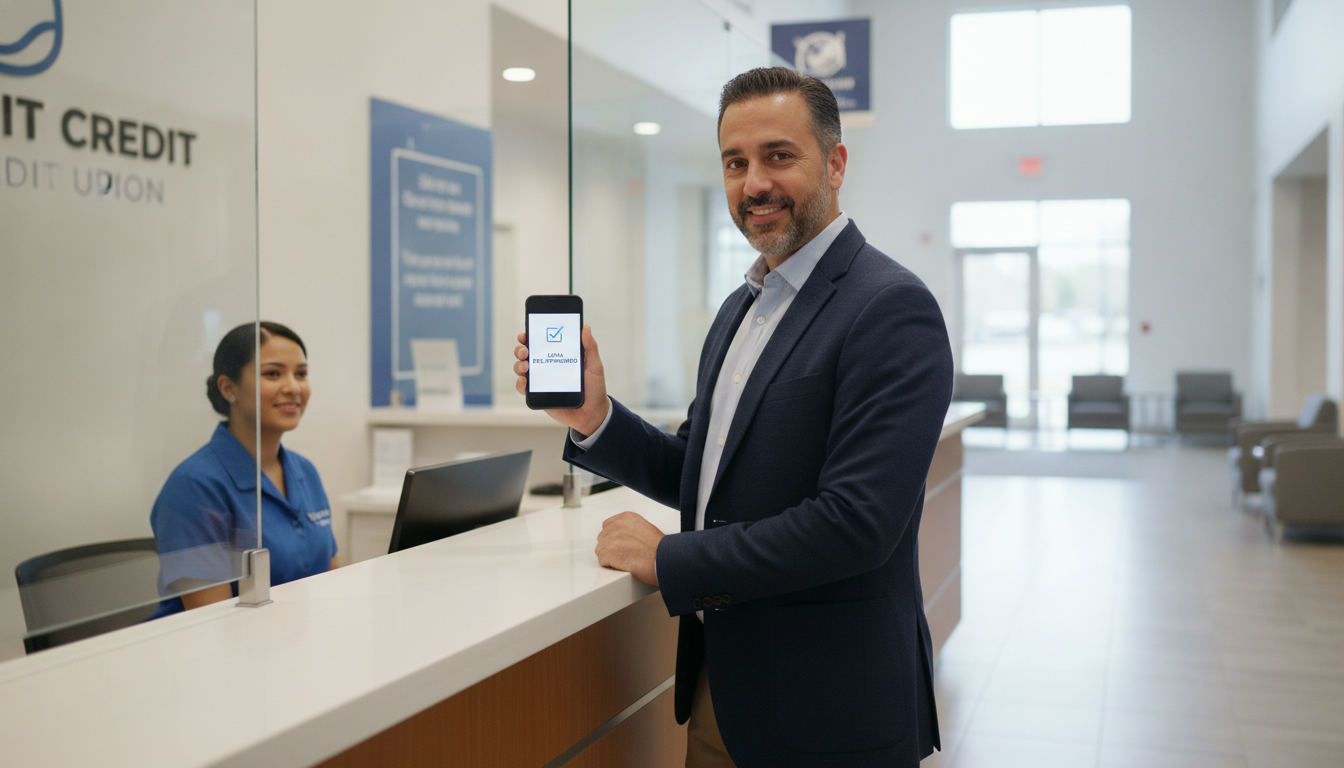
The single most effective protection costs you nothing and takes about ten minutes. Get pre-approved for an auto loan from your own bank or credit union before you walk onto the lot. A pre-approval is a real rate offer from a lender, in writing, based on a quick check of your credit and income.
When you have a pre-approval in hand, the dealer’s financing becomes a competition instead of a take-it-or-leave-it offer. Hand them your pre-approved rate and say you will finance through them only if they beat it. Now the markup works against the dealer, because to win your loan they have to shave their own reserve.
Worried about your credit score taking a hit from shopping? It will not, if you keep it tight. Multiple auto-loan inquiries inside a 14 to 45 day window count as a single inquiry on your credit report. In plain terms, you can collect rate quotes from a handful of lenders in the same two weeks and your FICO score treats it as one shopping event, not five separate hits. We cover this timing in detail in our guide to how loan pre-approval shapes your negotiation power, and the mechanics of the buy-rate gap in our breakdown of the buy rate versus sell rate spread.
Before you negotiate, know your financing. Compare auto loan rates from top lenders so you walk in with a real number.
If you already signed, refinancing is your second shot
If you read this and realized you took a marked-up rate last year, you are not stuck with it. Refinancing replaces your current loan with a new one at a lower rate, ideally from a lender that does not mark it up.
The window is open right now. More than 100,000 car owners refinanced their auto loans in the first quarter of 2026, cutting their rates by an average of 2.24 percentage points and saving about $81 a month. That is roughly $1,000 a year for many of them, on a loan they already had.
The math favors refinancing when your credit has improved since you bought, when rates have dropped, or when you suspect your original rate was marked up in the first place. Run the numbers before your loan ages past its halfway point, because most of the interest on a car loan is front-loaded into the early payments.
FAQ
What is the difference between the buy rate and the sell rate on a car loan? The buy rate is the interest rate the lender actually approved for you and sent to the dealer. The sell rate is the rate the dealer quotes you after adding a markup. The gap between them is the dealer’s profit, and it can legally run 2 to 3 percentage points.
Is it legal for a dealer to mark up my interest rate? Yes. Dealer rate markups are legal, and the dealer is not required to tell you the rate was marked up. Your protection is to ask whether you are seeing the buy rate or the sell rate and to bring a competing pre-approval.
Will getting pre-approved hurt my credit score? Shopping for an auto loan within a 14 to 45 day window counts as a single inquiry on your credit report, so the impact is minimal. Collect your quotes inside that window and your score treats it as one shopping event.
How much can a rate markup really cost me? On a $32,000 loan over six years, a 2-point markup adds about $1,900 in interest. On a $45,000 loan it is closer to $2,700. The larger the loan and the longer the term, the more a markup costs.
Should I refinance if I think my rate was marked up? Often yes. If your credit has improved, rates have fallen, or you suspect a markup, refinancing can cut your rate by two points or more. Run the numbers early in the loan, since interest is front-loaded into the first years.