
By MyAutoResource Editorial Team · Reviewed by Steven Sun · 6 min read · Updated August 24, 2026
- When a financed car is a total loss, the lienholder named on your policy is paid from the settlement before you see a dollar of it, and the check is often issued jointly to you and the lender.
- Your loan payment is not automatically paused. Progressive’s own claims guidance tells borrowers directly to keep making loan payments until the insurer issues the payment to the lender, to protect their credit.
- Most states have adopted some version of the National Association of Insurance Commissioners’ (NAIC) model claims regulation, which requires an insurer to tender payment within 30 days of affirming liability once the amount is undisputed.
- If the settlement is less than the payoff balance, the shortfall is yours unless a GAP (guaranteed asset protection) waiver or policy covers it.
In this article
- Why the check doesn’t come to you first
- The part almost no one expects: the loan payment doesn’t stop
- How long the whole sequence is supposed to take
- What happens if the check is short
- Frequently asked questions
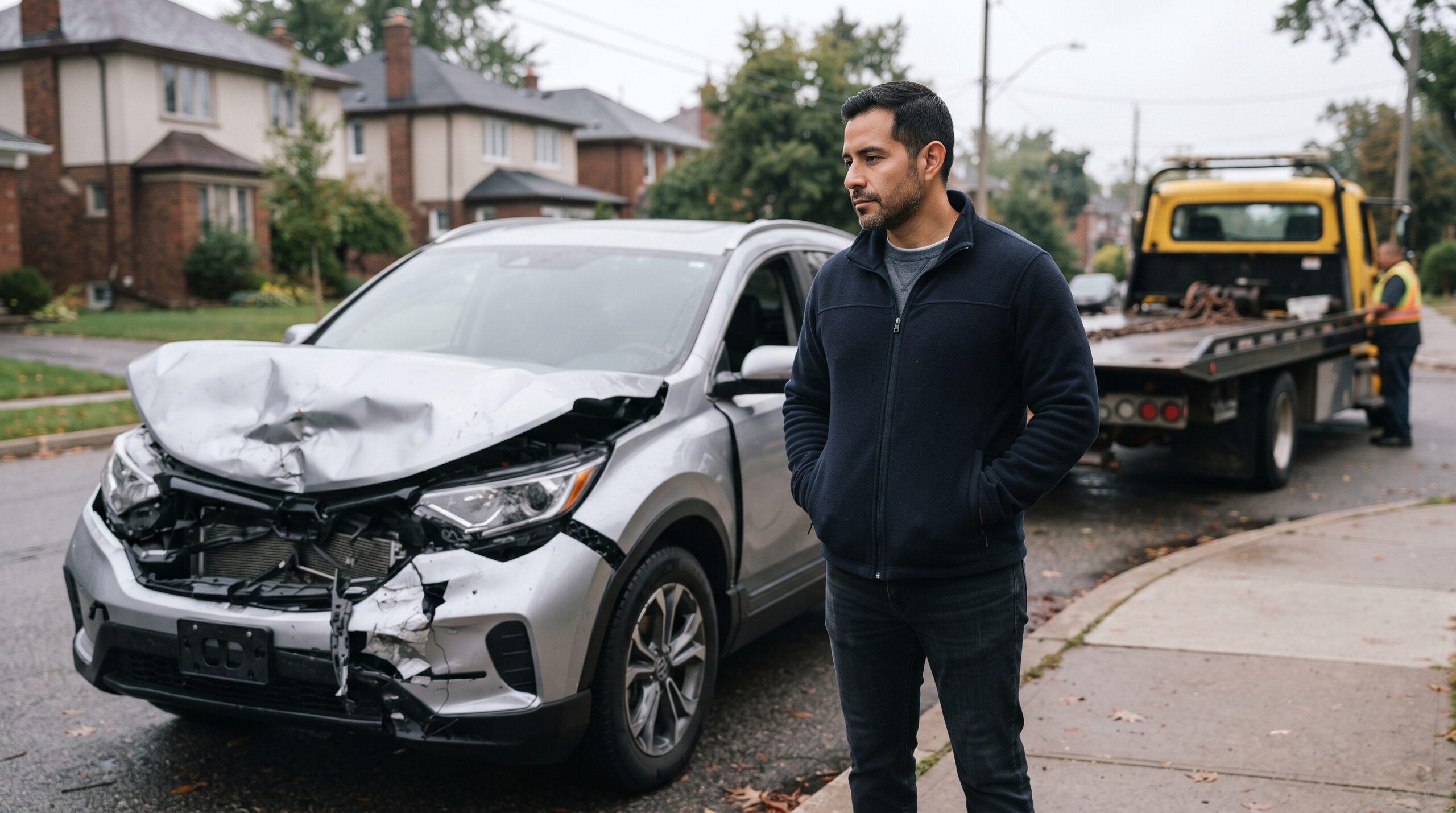
Daniel Reyes’ financed SUV was totaled in a hailstorm outside Amarillo in July 2026. The insurer’s adjuster approved an actual cash value (ACV) settlement of $18,400. Daniel still owed $21,000 on the loan. The check, once it arrived, wasn’t written to him. It was written to his lender first. And on the first of the following month, his loan servicer still expected a payment, on a car that no longer existed.
Why the check doesn’t come to you first
Every financed vehicle has a lienholder, the bank or credit union that holds a legal interest in the car until the loan is paid off, listed on your auto policy. When your insurer declares a total loss, it doesn’t write a check to you and trust that you’ll pay off the loan yourself — and whether the loss came from weather or a collision, the documentation you gather in the moment, the same steps that matter if you’re ever involved in a car accident, is what makes this payoff process go smoothly later. Progressive’s own explanation of the process for its policyholders is direct: “your insurer will send a payment to your lender for the actual cash value of the car, minus any deductible.” The lender applies that payment to whatever you still owe. Only if money is left over after the loan is paid off does that remainder come to you.
This protects the lender’s collateral interest, and it also means you have no say in the order of operations. The payoff happens first, automatically, regardless of how you’d have preferred to use the money.
The part almost no one expects: the loan payment doesn’t stop
Here is the mechanic that catches people. A car being declared a total loss does not cancel your loan or pause your payment obligation. The loan contract you signed is unaffected by what happened to the collateral until the lender actually receives and applies the insurance payoff. Progressive tells its own policyholders exactly this, in plain language: “To maintain your good credit, you should continue to make your loan or lease payments until the insurance company issues payment to your lender.”
That gap between “the car is gone” and “the lender has applied the payoff” can run for weeks. Claims involve adjuster review, a payoff quote from the lender that is often only valid for a set number of business days, mailing time, and the lender’s own processing once the check arrives. A car payment falling due somewhere in that window is not a bank error. It’s the loan working exactly as written, on a car sitting in a salvage yard.
How long the whole sequence is supposed to take
Insurance claims handling isn’t unregulated. The National Association of Insurance Commissioners (NAIC), the standards body whose model rules most states adopt in some form, sets a baseline in its Unfair Claims Settlement Practices Model Regulation: once liability is affirmed and the amount is not in dispute, “the insurer shall… tender payment within thirty (30) days of affirmation of liability.” States implement this with their own variations, so the exact number can differ by state, but the underlying principle is consistent: once your insurer agrees to pay and the amount is settled, there’s a real deadline attached, not an open-ended wait.
That 30-day clock covers the insurer’s side. It says nothing about how quickly your lender processes the check once it lands, which is the part borrowers have the least visibility into and the most reason to call and ask about directly.
What happens if the check is short
The ACV settlement is based on the car’s market value at the time of loss, not what you owe. If your loan balance is higher than that value, the difference is called negative equity, and it does not disappear when the car does. Without additional coverage, that shortfall is a debt you still owe the lender directly, even though the vehicle is gone.
Run Daniel’s own numbers: he owed $21,000 and the insurer approved $18,400, so $21,000 minus $18,400 leaves a $2,600 shortfall. That $2,600 is what Daniel would have owed the lender directly, out of pocket, on a car that no longer existed, if nothing else had covered it.
Guaranteed asset protection (GAP) coverage, when you have it, is built specifically to close this gap. The Consumer Financial Protection Bureau (CFPB) describes GAP as coverage that “is intended to cover the difference between the amount you owe on your auto loan and the amount the insurance company pays if your car is… totaled.” Whether GAP applies to your loan is worth confirming before a total loss happens, not after, since it’s typically purchased at financing and isn’t automatically included. If you’re weighing whether GAP is worth adding when you’re already carrying negative equity into the loan, or deciding whether to keep or trade a financed car at renewal, those decisions both hinge on the same payoff math above.
Frequently asked questions
Why does the insurance check go to my lender instead of me? Your lender is the lienholder named on your auto policy, and it has a legal interest in the vehicle until the loan is paid off. Insurers pay the lienholder first from a total-loss settlement, and any amount left over after the payoff goes to you.
Do I still have to make my car payment after the car is declared a total loss? Yes, until the insurer actually issues payment to your lender and the lender applies it to the loan. The loan contract stays in effect during claims processing, and a missed payment in that window reports like any other missed payment.
How long does the insurer have to pay out a total-loss claim? Most states have adopted some version of the NAIC’s model claims regulation, which sets a 30-day deadline from when the insurer affirms liability on an undisputed amount. Exact rules vary by state.
What if the settlement doesn’t cover my full loan balance? That shortfall, called negative equity, becomes your direct responsibility to the lender unless you have GAP coverage or a similar waiver that specifically covers the difference between the payoff and the settlement.
What should I do the same week my financed car is totaled? Contact your insurer and your lender directly and get a written timeline from each. Keep making scheduled loan payments until you have confirmation the payoff has posted, since that’s the only thing that actually stops the payment obligation.
The same lienholder relationship also shapes what coverage your lender requires while the loan is active, and what happens if you let that required coverage lapse and the lender force-places its own policy on your account instead.