

By MyAutoResource Editorial Team · Reviewed by Steven Sun · 7 min read · Updated August 17, 2026
- There is no legal floor on how many payments you have to miss before a lender can repossess your car. Default is defined by your loan contract’s breach language, and it can include a lapsed insurance policy or an unauthorized move, not just a missed payment.
- Wisconsin requires a 15-day right-to-cure notice before repossession; Kansas requires 20 days after 10 days in default. Texas has no pre-repossession cure requirement at all, only a post-repossession redemption right.
- In the CFPB’s most recent published data (loans from 2018 through 2022), 94% of repossession sales left the borrower owing a deficiency balance, averaging $11,340.
- Auto loan balances reached $1.71 trillion in the second quarter of 2026, and serious (90-plus day) delinquency rose to 3.00%, the New York Fed reported in August 2026.
In this article
- What Actually Puts Your Loan in Default
- The States That Require a Right-to-Cure Notice Before Repo
- Reinstatement vs. Redemption: Two Very Different Price Tags
- The Deficiency Balance That Can Follow You After the Car Is Gone
- FAQ
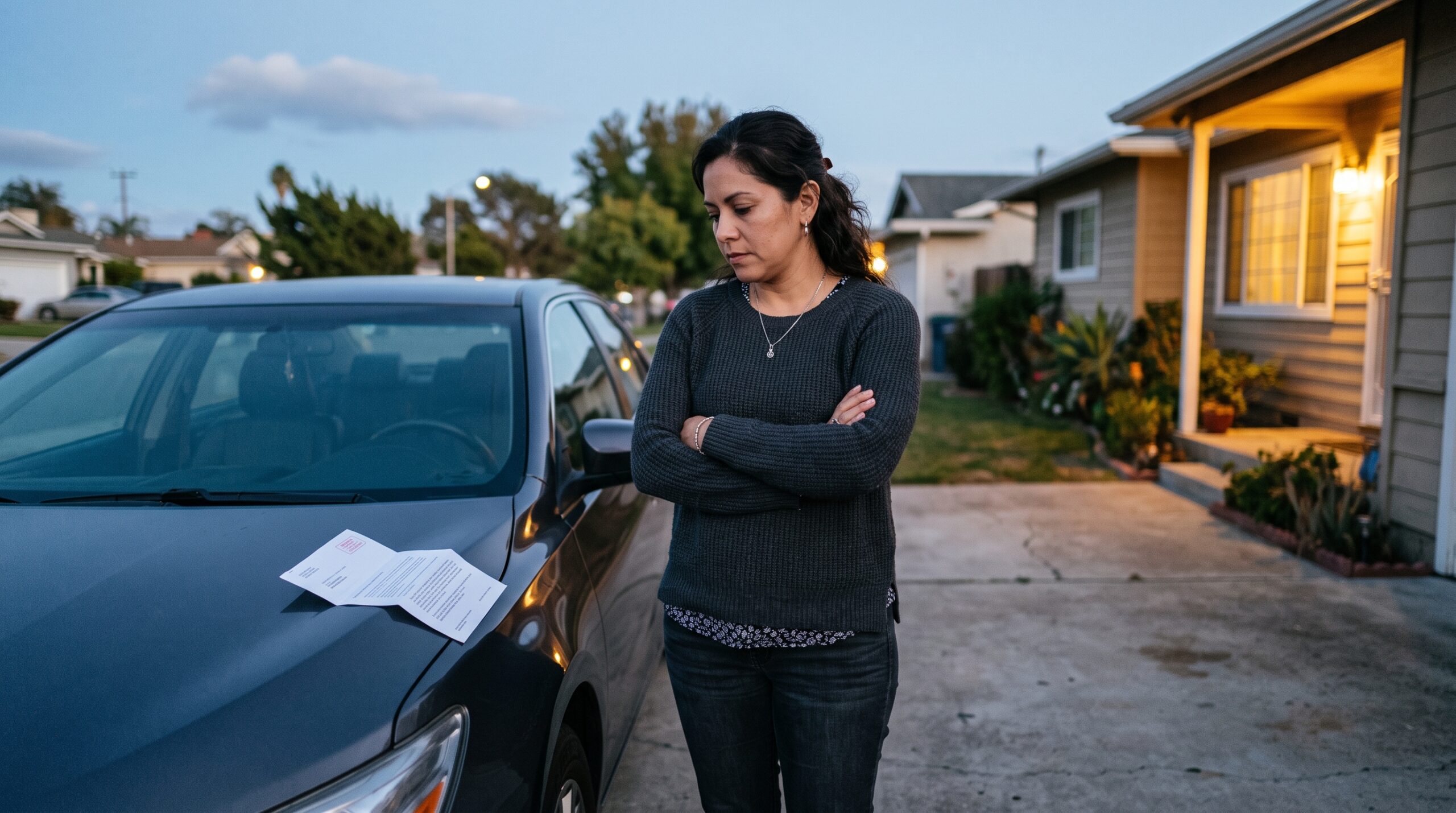
Derrick is 52 days behind on the $28,400 balance on his truck loan. The letter he just got does not say he is being repossessed because he missed two payments. It says he is in default of the finance agreement, a broader legal trigger that has nothing to do with a specific payment count.
What Actually Puts Your Loan in Default
Most borrowers assume there is a universal rule, something like three missed payments equals repossession. There isn’t one. The Consumer Financial Protection Bureau (CFPB), the federal agency that regulates auto lenders, defines repossession as happening when a borrower “falls behind on payments or some other breach of the finance contract or loan agreement occurs” and the lender moves to recover the vehicle.
Under Article 9 of the Uniform Commercial Code (UCC), the set of contract laws every state has adopted for secured loans like auto financing, a lender can take possession of the car “after default,” and default is whatever the security agreement you signed says it is. That commonly includes non-payment, but it can also include letting your full-coverage insurance lapse, moving the car out of state without telling the lender, or using it for something the contract prohibits.
The number of missed payments before a lender actually acts is a business decision each lender makes on its own, not a legal requirement. Some lenders wait 90 days. Others start the process at 30. Your contract, not a law, sets that clock.
The States That Require a Right-to-Cure Notice Before Repo
A right-to-cure notice is a formal letter giving you a set number of days to pay only what’s overdue, not the whole loan, before the lender can legally repossess. Whether you get one depends entirely on your state.
| State | Right-to-cure required? | Cure period | Statute |
|---|---|---|---|
| Wisconsin | Yes | 15 days after notice | Wis. Stat. § 425.105 |
| Kansas | Yes | 20 days after notice (default must run 10 days first) | K.S.A. § 16a-5-111 |
| South Carolina | Yes | 20 days after notice | S.C. Code § 37-5-110/111 |
| Maine | Yes | 14 days after notice | 9-A M.R.S. § 5-110/111 |
| Texas | No pre-repo cure right | None before repo; redemption allowed any time before the lender disposes of the car, no fixed day count | Tex. Bus. & Com. Code Ch. 9 (UCC § 9-623) |
| California | No pre-repo cure right | 15-day conditional reinstatement, after repo | Rees-Levering Act, Civ. Code § 2983.2 |
This is not an exhaustive list of every state. Several other states also require pre-repossession cure notices, but confirm your own state’s exact statute before relying on a specific day count, since terms and deadlines vary and some sources online repeat outdated figures. If you’re in a state without a pre-repo cure right, like Texas, your contract might still offer a voluntary reinstatement option. Read the default and remedies section of your loan agreement to find out, since the state won’t require it for you.
Reinstatement vs. Redemption: Two Very Different Price Tags
These two words get used interchangeably by borrowers, and the price difference between them is enormous.
Reinstatement means paying only what’s overdue, the missed payments plus any late fees, to bring the loan current again. The loan continues on its original terms as if nothing happened. On Derrick’s $28,400 balance with a $612 monthly payment, being 52 days past due means roughly two missed payments plus fees. Reinstatement might cost him $612 x 2 = $1,224, plus a late fee of around $100, for a total near $1,324 to keep his truck and his original loan.
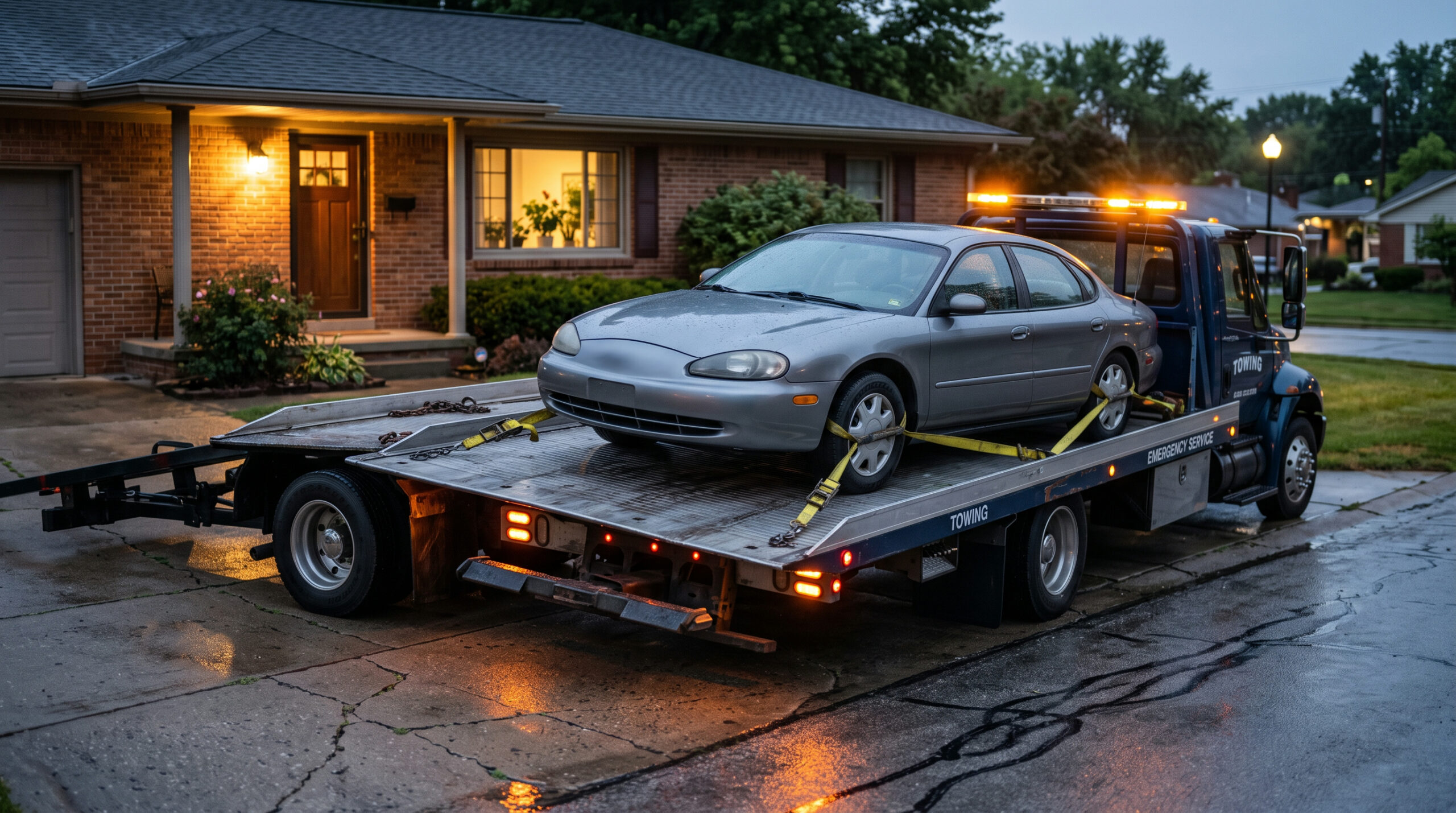
Redemption means paying off the entire remaining loan balance, all $28,400, plus repossession costs like towing and storage, which often run $500 to $800. Redemption after repossession would cost Derrick roughly $28,900 to $29,200, all at once, to get the same truck back.
The gap between $1,324 and roughly $29,000 is the entire reason it matters whether your state requires a cure notice before the tow truck shows up. A right-to-cure state gives you a guaranteed shot at the cheaper number. A pure UCC state like Texas does not, and your only guaranteed statutory option once the car is gone is the far more expensive one.
The Deficiency Balance That Can Follow You After the Car Is Gone
If the lender repossesses the car and sells it, usually at auction, and the sale price doesn’t cover what you still owe plus repossession and sale costs, you can still owe the difference. That’s called a deficiency balance, and lenders can pursue it in court like any other unpaid debt.
The CFPB’s most recent published research on this, covering loans from 2018 through 2022, found that 94% of repossession sales in its dataset ended with a deficiency balance still owed. The average deficiency ran $10,747 in December 2019, dropped to $7,971 by December 2021 as used-car values climbed, then rose back to $11,340 by December 2022. The report does not include more recent figures, so treat those numbers as the last confirmed snapshot rather than a current 2026 average.
This is happening against a backdrop of rising loan balances. The Federal Reserve Bank of New York reported in August 2026 that total auto loan balances reached $1.71 trillion in the second quarter, up $28 billion, with serious delinquency (90 or more days past due) climbing to 3.00% from 2.93% a year earlier. A repossession doesn’t erase the loan. It usually just converts it into a smaller, unsecured, and harder-to-manage debt.
Frequently Asked Questions
How many payments can I miss before my car gets repossessed? There’s no universal legal number. Your lender’s contract defines default, and some lenders start the repossession process after one missed payment while others wait 60 to 90 days. Check your loan agreement’s default and remedies section for your lender’s specific policy, since state law usually doesn’t set this number for you.
What is a right-to-cure notice, and does my state require one? It’s a formal notice giving you a set number of days, commonly 14 to 20, to pay only the overdue amount before repossession can proceed. States like Wisconsin, Kansas, South Carolina, and Maine require it by statute. States like Texas do not require one before repossession, only a redemption right afterward.
What’s the real difference between reinstating and redeeming my loan? Reinstatement brings the loan current by paying only the missed payments and fees, usually a few hundred to a couple thousand dollars. Redemption requires paying the entire remaining loan balance plus repossession costs, often tens of thousands of dollars, all at once.
Can I still owe money after my car is repossessed and sold? Yes. If the sale doesn’t cover your remaining balance plus repossession costs, you owe the shortfall as a deficiency balance. The CFPB’s research found this happened in 94% of the repossession sales it studied.
What should I do the moment I get a repossession or default notice? Read it immediately to see whether it names a specific cure amount and deadline. If it does, that’s usually your cheapest path back to keeping the car. Contact your lender the same day. Waiting past the stated deadline can eliminate the cure option entirely.