

7 min read – Last updated May 28, 2026
- Bodyshop Magazine reported on May 28, 2026 that ghost auto insurance searches jumped over 2,000 percent, mirroring NICB warnings about a parallel rise in fraudulent policies sold in the United States.
- Lender insurance verification systems typically flag a fake policy within 30 to 60 days of issuance, which is when the force-placed coverage trigger fires.
- Force-placed insurance on a financed car costs an average of $250 to $300 a month, often 3 to 4 times the legitimate market rate, per NAIC data.
- A 90-second check on the state insurance department licensing site confirms whether the agent and carrier on the ID card are real before the lender ever asks.
In this article
- What ghost auto insurance is and why financed cars are the target
- How your lender’s verification system catches the policy
- The force-placed coverage trigger and what it costs
- Verify your policy in 90 seconds
- What to do if you discover the policy is fake
- Frequently asked questions
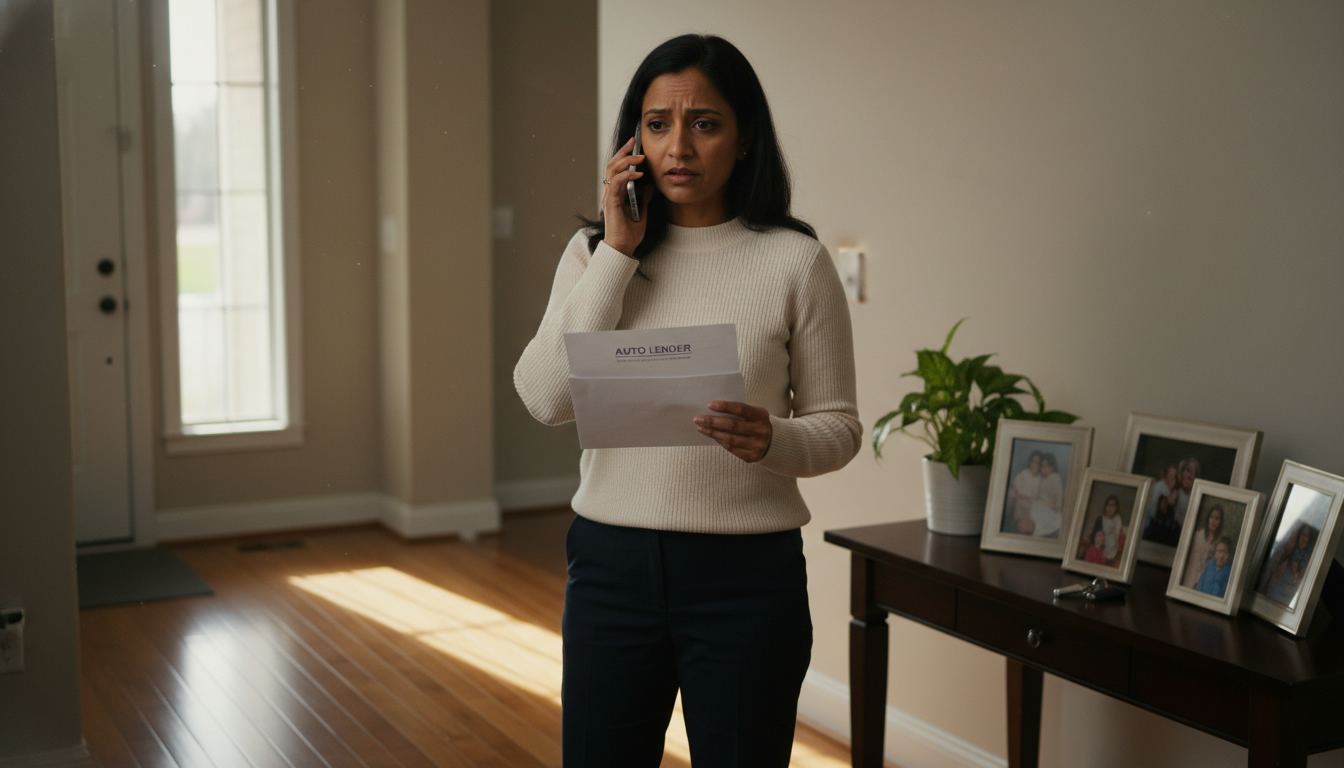
James, a 29-year-old IT contractor in Atlanta, paid $89 a month for what looked like full coverage on his 2022 Mazda CX-5, financed through his credit union, until his lender’s insurance verification system flagged the policy as nonexistent in late April. The insurer name on his ID card was real. The policy number was not. Within 18 days, the credit union added force-placed coverage at $267 a month and capitalized the back-billing onto his loan balance.
What ghost auto insurance is and why financed cars are the target
Ghost auto insurance is a policy sold through a fraudulent broker or unlicensed intermediary that either does not exist at the underlying carrier or has been altered (lower premium, different coverage, different driver) between application and binding. The premium goes to the fake broker. The ID card looks legitimate and may even reference a real carrier name and a real-looking policy number. The actual policy on file at the insurer either was never bound or was bound at terms that do not match the ID card.
Bodyshop Magazine‘s May 28, 2026 reporting flagged a 2,000 percent surge in ghost insurance search activity. The National Insurance Crime Bureau (NICB) has tracked a parallel rise in the United States, with state insurance departments in Florida, Texas, California, and New York issuing consumer alerts through 2025 and into 2026.
Financed cars are the highest-value target for this scheme. The fraudsters charge a premium close to the legitimate market rate, the buyer believes they are insured, and the lender accepts the proof of insurance at funding. The fraud unwinds only when the lender’s verification system rechecks the policy. That recheck is automatic, runs on a fixed schedule, and is the exact mechanism the lender uses to enforce its insurance requirements on a financed car.
How your lender’s verification system catches the policy
Lenders verify auto insurance through one of three channels. The first is a direct electronic feed from the carrier (most major carriers transmit binder and cancellation data to large lenders through services like Verisk or LexisNexis). The second is a periodic insurance request letter to the borrower asking for an updated ID card. The third is a real-time lookup against the carrier’s policy database at the policy number on file.
A ghost policy fails all three. The electronic feed shows no policy under the borrower’s name. The carrier’s policy database returns no match on the policy number. The borrower can send a second ID card, but it will fail the same check. Most lender verification systems run the recheck within 30 to 60 days of original binder, which is the window where the fraud surfaces.
The borrower’s first notification is usually a written notice from the lender stating that proof of insurance is required. A second notice follows, often within 10 to 14 days, warning of impending force-placed coverage. Many borrowers either ignore the first notice (assuming it is a routine letter) or attempt to provide the same fraudulent ID card a second time. Both responses trigger the force-placed coverage.
The force-placed coverage trigger and what it costs
Force-placed insurance, sometimes called collateral protection insurance, is a policy the lender purchases on the borrower’s behalf when proof of valid coverage cannot be established. The premium is added to the loan balance or billed separately. NAIC consumer alerts have flagged that force-placed coverage typically costs 3 to 4 times market rate for the same vehicle.
For a 2022 Mazda CX-5 financed at $26,000, market-rate full coverage at average risk runs $90 to $130 a month. Force-placed coverage on the same vehicle through a lender-arranged carrier commonly runs $240 to $310 a month, per the most recent state insurance department filings. The differential covers the lender’s cost of carrying additional risk on the loan and is structured for the lender’s benefit, not the borrower’s.
The cost compounds. Force-placed coverage typically backdates to the date of the first failed verification. A borrower discovering the fraud at day 60 may face a back-billing of two months of premium ($500 to $620) added to the loan balance. The premium continues at the force-placed rate until the borrower provides proof of valid coverage, which means buying a new legitimate policy from a different agent or carrier.
For more on how the math plays out and what it does to your monthly payment, see our breakdown on force-placed insurance on a financed car.
Verify your policy in 90 seconds
Three lookups confirm a policy is legitimate. Run all three before the lender does.
First, check the agent’s license on the state insurance department website. Every state regulator publishes a free producer license lookup. Enter the agent’s name and the policy number. If the agent does not appear in the state database, the policy was not sold by a licensed producer in your state. Stop there.
Second, call the carrier directly at the phone number listed on the carrier’s official website (not the number on the ID card or the agent’s email signature). Ask the carrier’s policy service line to confirm the policy number. The carrier will either confirm the policy exists at the terms shown on the ID card, confirm it exists at different terms, or confirm no policy is on file. The last two answers mean the policy is fraudulent or materially altered.
Third, log into the carrier’s customer portal directly. Every major carrier maintains a free customer portal with policy documents, ID cards, and billing history. If the policy is real, you should be able to register the policy number to your account and see the documents. If the portal returns no match, the policy is not on the carrier’s books.

What to do if you discover the policy is fake
If any of the three checks fail, treat the policy as nonexistent. Buy a legitimate replacement policy immediately from a licensed carrier or direct insurer (Geico, Progressive, State Farm, Allstate, USAA, or any carrier verified on the state insurance department database). Bind coverage effective immediately and forward proof of insurance to your lender the same day.
Report the fraud to your state insurance department fraud bureau and to the NICB. Filing matters even if the dollar loss is small, because it builds the case file regulators need to revoke producer licenses or pursue criminal charges. Keep copies of all ID cards, payment confirmations, and communications with the fake agent for the file.
Notify your lender in writing as soon as the new policy is in place. If force-placed coverage has already started, the new policy will replace it, but the back-billed force-placed premium has to be requested for refund separately. Most lenders will credit the unused portion back to the loan balance once new coverage is verified.
Ready to compare your options? Get a free auto insurance quote and make sure your coverage meets your lender’s requirements.
Frequently asked questions
How do I know if my auto insurance is real?
Check the producer license on your state insurance department website, call the carrier directly at the phone number listed on the carrier’s official site (not the agent’s), and log into the carrier’s customer portal with the policy number. If any of those three steps fail to return a match, treat the policy as fraudulent and replace it immediately.
Why are financed cars the target for ghost insurance?
Lenders require proof of insurance at funding and reverify on a 30 to 60 day cycle. Fraudsters sell the fake policy at close to market premium, the buyer thinks they are insured, and the lender accepts the ID card at funding. The fraud surfaces only at reverification, after the fraudster has been paid and is unreachable.
What is force-placed insurance and how is it different from normal coverage?
Force-placed insurance is a policy your lender buys on your behalf when proof of valid coverage cannot be established. It protects the lender’s collateral interest in the vehicle, not the borrower’s interests. It typically costs 3 to 4 times market rate, often has higher deductibles, and may exclude coverage for personal injury or other risks a normal policy would cover.
Will buying a new legitimate policy stop the force-placed coverage right away?
The new policy stops new force-placed premium from being added, but any premium already billed during the gap between fraud discovery and new coverage usually stays on the loan until the lender processes the refund. Notify your lender in writing the same day the new policy binds and request a refund of the unused portion.
Does ghost insurance affect my credit score?
The fraudulent policy itself does not appear on a credit report. The downstream effects can. If force-placed coverage is added to the loan balance and the borrower stops paying because the higher payment is unaffordable, late payments and collections will appear on the credit report. Resolving the coverage gap fast is the cheapest credit protection.