
8 min read – Last updated May 25, 2026
- Federal law requires EV battery coverage of at least 8 years or 80,000 miles. CARB states (California and the 14 aligned states) extend it to 10 years or 150,000 miles.
- Most automakers replace the battery at 70 percent capacity retention. Chevrolet’s threshold is 60 percent, the lowest in the industry.
- Third-party extended EV warranties typically cover outright failure, not gradual capacity loss. Read the “degradation” exclusion before you sign.
- Replacing an EV battery out of pocket costs $10,000 to $20,000 depending on pack size and vehicle, per CarEdge and Endurance Warranty data.
In this article
- What the 70 percent floor actually means
- Factory coverage by automaker
- What third-party warranties cover and what they exclude
- The breakeven math on extended EV coverage
- What to verify in the contract before you sign
- Frequently asked questions
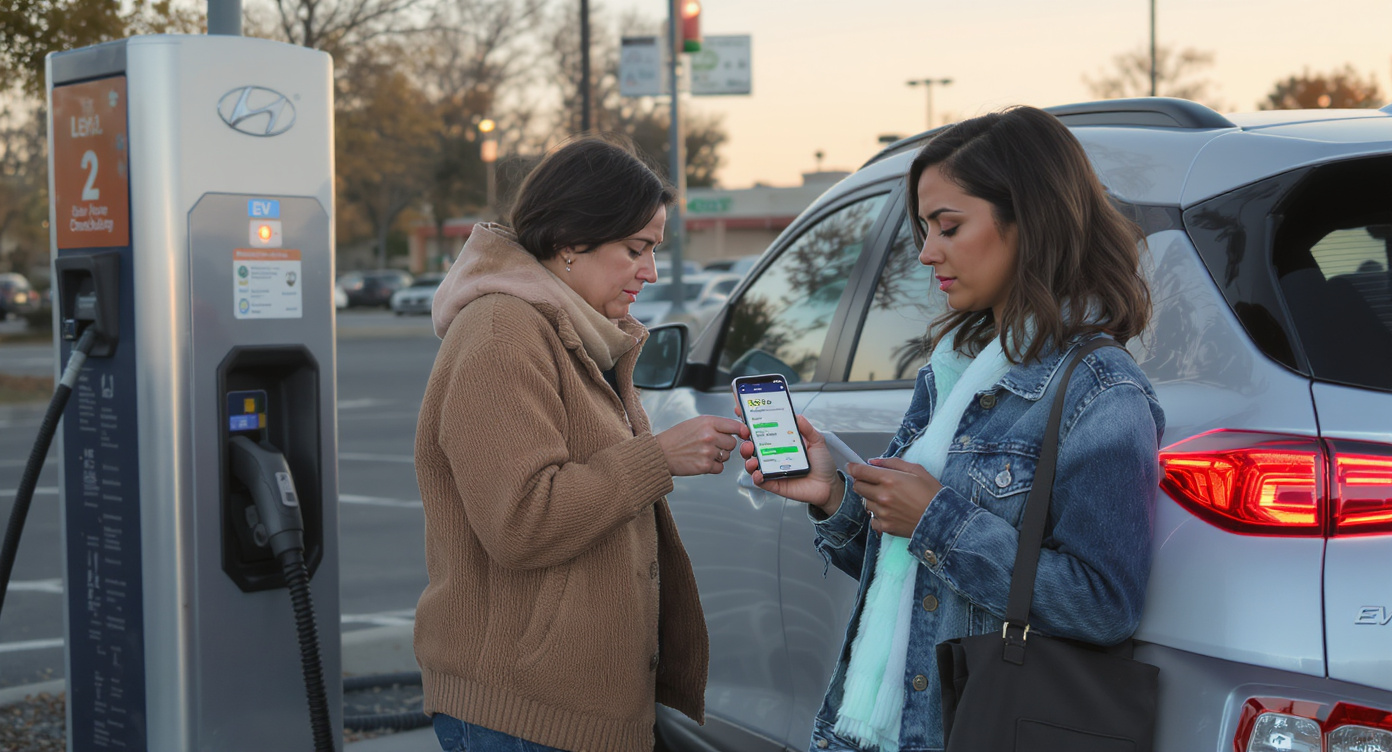
Priya, a 41-year-old project manager in Phoenix, bought a 2021 Hyundai Kona EV in March 2026 for $24,500. The carfax showed the battery at 91 percent of original capacity, well above Hyundai’s 70 percent warranty floor. The dealer offered her a third-party extended warranty for $2,890 covering 4 years past the factory expiration. She read the contract on the kitchen counter that night and saw it covered outright battery failure but explicitly excluded gradual capacity degradation. She passed.
What the 70 percent floor actually means
Federal regulation (40 CFR 85.2103) requires EV and hybrid manufacturers to warranty the high-voltage battery for at least 8 years or 80,000 miles, whichever comes first. California and the 14 other states aligned to CARB (Colorado, Connecticut, Maine, Maryland, Massachusetts, New Jersey, New Mexico, New York, Oregon, Pennsylvania, Rhode Island, Vermont, Virginia, and Washington) extend that to 10 years or 150,000 miles. That is the legal floor.
What the floor does not guarantee is replacement at any particular state of health. Almost every manufacturer caps the warranty obligation to replace the battery only when capacity drops below a published threshold, usually 70 percent of original. Below 70 percent, the automaker covers a replacement. At 71 percent, the battery is considered to be aging normally and the warranty pays nothing, even if range is noticeably reduced.
For a vehicle that left the factory with 300 miles of EPA range, that 70 percent floor means coverage does not kick in until the working range falls below 210 miles. Owners who feel range anxiety at 240 miles, which is still well within normal degradation, have no warranty claim available. Consumer Reports has documented that modern EV batteries lose roughly 2 percent capacity per year on average, which means most vehicles will sit between 80 and 88 percent through years 5 to 8.
Factory coverage by automaker
Federal floor is 8/100,000, but several manufacturers go further. CarEdge’s published 2025 EV warranty comparison shows:
- Rivian (R1T and R1S): 8 years or 175,000 miles, 70 percent retention floor (the longest mileage cap on the market)
- Tesla Model S and Model X: 8 years or 150,000 miles, 70 percent retention floor
- Tesla Model 3 Long Range/Performance and Model Y: 8 years or 120,000 miles
- Tesla Model 3 Rear-Wheel Drive: 8 years or 100,000 miles (above the federal 80,000-mile floor)
- Hyundai and Kia EVs (Ioniq 5, EV6, Kona EV, Niro EV): 10 years or 100,000 miles, 70 percent floor (best affordable EV coverage)
- Ford, Jaguar, Lucid, Polestar, Volvo, VW, Audi, Nissan, Toyota bZ4X: 8 years or 100,000 miles, 70 percent floor
- Chevrolet Bolt, Blazer EV, Equinox EV, Cadillac Lyriq: 8 years or 100,000 miles, but only 60 percent retention floor
The Chevrolet 60 percent threshold is the industry outlier. On a 300-mile-range vehicle, GM does not owe a replacement until the working range falls below 180 miles, an additional 30 miles of degradation tolerated before coverage triggers. Anyone buying a used Bolt or Blazer EV should know that going in.
What third-party warranties cover and what they exclude
When the factory warranty expires, most dealers and warranty brokers will pitch an extended vehicle service contract designed for EVs. The pitch usually emphasizes the cost of battery replacement ($10,000 to $20,000 per Endurance Warranty and CarEdge published data, depending on pack size). The pitch usually does not emphasize what gets excluded.
Three exclusions appear in nearly every third-party EV contract:
- Normal capacity degradation. Most plans cover “sudden and abnormal” failure but explicitly exclude gradual capacity loss. If your battery drops from 88 percent to 65 percent over 6 years, that is normal aging and not a covered event.
- Environmental damage. Flood, water intrusion, accident, fire, and vandalism are auto insurance events, not warranty events. The warranty pays nothing for any of these.
- Software modifications and unauthorized charging equipment. Aftermarket modifications (third-party chargers wired into the home, aftermarket battery management firmware) can void coverage entirely. Read the maintenance and modification clauses.
That leaves a narrow definition of “covered”: outright cell or module failure, thermal management system failure, onboard charger or inverter failure, and high-voltage power electronics failure. Those are real failure modes and they do happen, but they are also the failure modes that hit hardest in the first 5 to 7 years of ownership, when most owners are still under the factory warranty. The third-party warranty covers years 8 onward, when those electronic failures slow down and gradual degradation becomes the dominant aging mode. That is the underwriting gap.
The breakeven math on extended EV coverage
Run the math on a typical 2021 Hyundai Kona EV like Priya’s. Factory warranty runs through August 2031 (10 years from sale). The third-party extended warranty quoted at $2,890 covers years 11 through 14 (August 2031 through August 2035).
During years 11 to 14, the dominant failure mode is gradual capacity loss, which is the exact exclusion the contract carves out. The covered modes (sudden electronic failure) become statistically rare on a battery this aged. Outside Financial and Endurance Warranty published claim data show that fewer than 8 percent of out-of-warranty EV battery problems in years 11+ classify as the kind of “sudden” failure a third-party warranty would pay for.
The breakeven calculation is straightforward. The owner pays $2,890 up front. Probability of a covered claim during the coverage period, per industry claim data, is approximately 6 to 8 percent. Even if the claim is fully covered at $14,000 (mid-range battery replacement cost), expected value of the contract is roughly $2,890 spent against ($14,000 x 0.07) = $980 in expected payout. The math runs negative by a wide margin, consistent with the broader pattern Consumer Reports and other independent reviewers have documented across extended vehicle service contracts.
For used EV shoppers debating whether the warranty rolls into a financed deal smoothly, the math gets worse, not better. Coverage paid for in cash sits at a negative expected value; coverage paid for through financing layers 7 to 8 percent interest on top. That is one of the reasons our breakdown of new vs used cars treats extended coverage as a separate line item that should never be financed.

What to verify in the contract before you sign
If an extended EV warranty actually fits a specific situation (high-mileage commuter, no factory coverage left, a model with a known electronic failure pattern), the contract still needs to be read carefully. Pull these four items out of any third-party EV warranty quote before you decide:
- The exact wording of the battery capacity clause. Look for words like “gradual degradation,” “normal wear,” or “expected aging.” Each is an exclusion of the most likely failure mode.
- The deductible per claim. Many third-party plans carry $100 to $250 per visit deductibles that stack on diagnostic charges.
- The labor rate cap. Specialty EV labor at the dealer can run $200+ per hour. Some warranties cap reimbursement at $90 to $120 per hour, leaving the owner to pay the difference.
- Cancellation and refund terms. A reputable warranty will offer a prorated refund within 30 to 60 days. Pressure tactics during the F&I pitch (“this offer expires when you leave today”) are a sign to walk.
The clean version of this decision rule: if the contract excludes gradual capacity loss and you are buying coverage for years 8 and beyond, the warranty is structured against you. The covered failure modes are concentrated in earlier years, exactly the years the factory warranty already covers.
Not sure if extended coverage is worth it for your vehicle? Get a free auto warranty quote and compare your options before your manufacturer coverage runs out.
Frequently asked questions
Does my factory EV warranty cover battery degradation?
Most factory EV warranties guarantee a minimum of 70 percent capacity retention through the warranty period (8 years or 80,000 miles federally; 10 years or 150,000 miles in CARB states). Chevrolet’s threshold is 60 percent. Above the threshold, gradual capacity loss is considered normal aging and is not a covered event.
What is the difference between battery degradation and battery failure?
Degradation is the gradual loss of storage capacity due to chemical aging and charging cycles, typically about 2 percent per year. Failure is a sudden electrical or mechanical fault, like a cell short, thermal management failure, or onboard charger failure. Factory warranties cover both up to specified limits. Third-party extended warranties usually cover only failure.
How much does it cost to replace an EV battery out of pocket?
Between $10,000 and $20,000 for most consumer EVs, per published CarEdge and Endurance Warranty figures. A Tesla pack replacement averages $12,000 to $18,000. Smaller packs like the original Nissan Leaf can be as low as $5,000 to $7,000. Cost scales with pack size and labor complexity.
Should I buy a third-party EV extended warranty?
Usually no. The most likely failure mode in the later years of an EV (gradual capacity loss) is the most commonly excluded item in third-party contracts. The covered modes (sudden electronic failure) are statistically rare in years 8 and beyond. Expected value of most third-party EV warranties is negative.
What should I verify before buying any EV warranty?
Pull four items from the contract: the exact wording of the capacity degradation clause, the per-claim deductible, the labor rate cap, and the cancellation refund terms. If the contract excludes gradual degradation and you are buying coverage for years 8 and beyond, the warranty is structured against you.