

By MyAutoResource Editorial Team · Reviewed by Steven Sun · 7 min read · Updated September 21, 2026
- The federally required window sticker, known as the Monroney label, must list the manufacturer’s suggested retail price and specific standard and optional equipment, under 15 U.S.C. § 1232, the Automobile Information Disclosure Act.
- The second sticker some dealers add beside it is not federally required and is not part of the manufacturer’s suggested retail price (MSRP). States regulate it differently; California, for example, requires any markup above MSRP to be itemized and labeled “added mark-up” under California Vehicle Code § 11713.1(q).
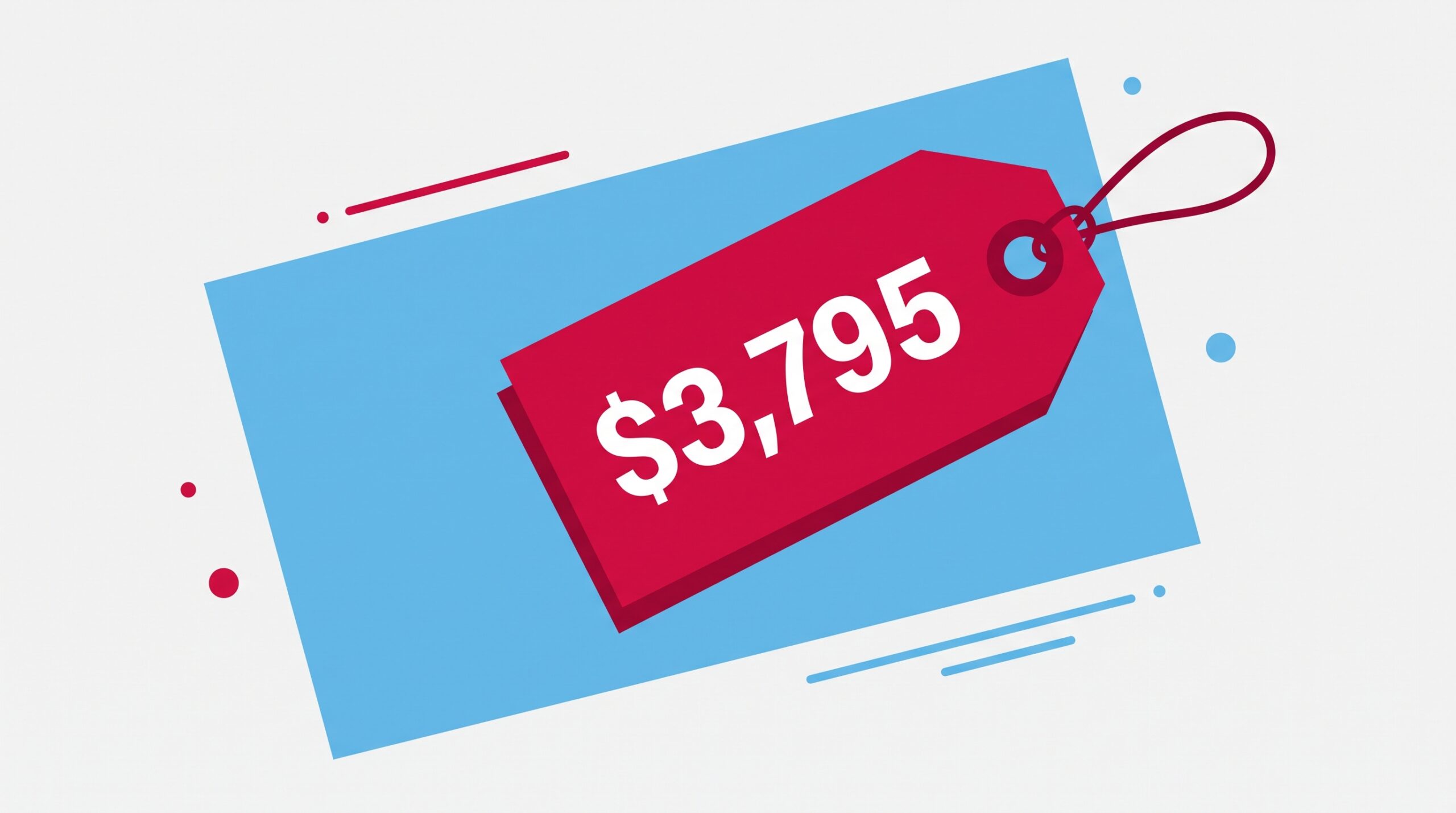
- Financing a $3,795 addendum instead of negotiating it off adds $3,415.50 to the amount borrowed and roughly $700.79 in extra interest over a 72-month loan at the Q2 2026 average new-car rate, a total cost of about $4,495.79.
- The Federal Trade Commission (FTC) sent warning letters to 97 auto dealership groups in March 2026 over pricing that doesn’t reflect the full amount a buyer is actually required to pay.
The federally required Monroney label on a new car lists the manufacturer’s suggested retail price. A second sticker some dealers tape beside it does not, and financing a typical $3,795 addendum instead of negotiating it off adds roughly $700 more in interest over the life of the loan.
Trevor Anh found a Toyota RAV4 with a $31,400 Monroney sticker at a Georgia dealership in September 2026. Taped beside it was a second sticker: paint sealant, nitrogen-filled tires, VIN (Vehicle Identification Number) etching, and a “market adjustment,” totaling $3,795. Nothing on the second sticker came from Toyota.
In this article
- What the Monroney label actually guarantees
- What the second sticker actually is
- What financing the addendum actually costs
- What you can and can’t negotiate off
- Frequently asked questions
What the Monroney label actually guarantees
The Automobile Information Disclosure Act, codified at 15 U.S.C. § 1232, requires every new car manufacturer to affix a label before the vehicle reaches a dealer’s lot. That label, commonly called the Monroney label after the senator who sponsored the 1958 law, must state the manufacturer’s suggested retail price, the retail price of each factory-installed option, transportation charges, and a total of all of those figures, along with the vehicle’s identification details and safety ratings where assigned. It’s a federal disclosure requirement, not a marketing document, and the manufacturer’s own numbers on it can’t be altered.
What the Monroney label does not cover is anything the dealership adds after the car arrives on the lot. That’s where the second sticker comes in.
What the second sticker actually is
Dealer addendum stickers cover paint sealant, fabric protection, nitrogen-filled tires, VIN etching, “market adjustment” markups, and similar items that never came from the factory. Unlike the Monroney label, the addendum isn’t uniformly regulated by federal law. States handle it differently, and the rules genuinely vary.
California is one of the states with a specific statute on point. California Vehicle Code § 11713.1(q) prohibits a dealer from posting a supplemental sticker priced above MSRP unless it clearly discloses that the sticker reflects the dealer’s own asking price, discloses the MSRP itself, itemizes each added item and its price, and, if there’s still a gap between the sticker total and MSRP-plus-itemized-items, labels that remaining difference “added mark-up.” Not every state requires this level of itemization. Check your own state’s rules, or simply ask the dealer to itemize the addendum in writing before you sign anything.
At the federal level, the FTC sent warning letters to 97 auto dealership groups in March 2026, telling them plainly that the price they advertise has to be the real total a buyer pays, mandatory fees included, not a number that leaves them out. The letters specifically flagged advertised prices that exclude required fees, misrepresent available rebates, or fail to account for mandatory down payments. An addendum sticker isn’t automatically illegal, but a dealer who advertises the Monroney price while quietly requiring the addendum on every sale is exactly the pattern the FTC was describing.
What financing the addendum actually costs
Trevor’s $3,795 addendum doesn’t just cost $3,795. If he finances it along with the car instead of negotiating it off, it also raises the amount financed and the interest charged on that larger balance for as long as the loan runs.
Here’s the math, using a 10% down payment and the Q2 2026 average new-car rate of 6.35% APR (Annual Percentage Rate) over a 72-month term, the average new-car loan length that quarter:
- Without the addendum: $31,400 price, $3,140 down, $28,260 financed. Payment: $473.03 a month. Total interest over 72 months: $5,798.37.
- With the addendum financed in: $35,195 price, $3,519.50 down, $31,675.50 financed. Payment: $530.20 a month, $57.17 more every month. Total interest over 72 months: $6,499.16, or $700.79 more than without it.
- Total real cost of the addendum: the $3,795 sticker price plus $700.79 in extra interest, or $4,495.79 over the life of the loan.
That extra $57.17 a month doesn’t look dramatic in isolation. Financed at 6.35% for six years, it is.
| Addendum item | Usually negotiable | Rarely negotiable |
|---|---|---|
| Paint sealant / fabric protection | Yes, almost always removable | |
| Nitrogen-filled tires | Yes, almost always removable | |
| VIN etching | Yes, often removable | |
| “Market adjustment” markup | Negotiable when inventory is available elsewhere | Harder on genuinely scarce, high-demand models |
| Manufacturer destination charge | Set by the manufacturer, appears on the Monroney label itself |
What you can and can’t negotiate off
The items on a dealer addendum sticker are almost never things the manufacturer requires. Paint sealant, fabric protection, and nitrogen-filled tires are aftermarket add-ons the dealership marks up well past cost, and most dealers will remove them if you ask directly and are willing to walk. A “market adjustment” markup is a different kind of negotiation: it reflects genuine local demand as much as dealer preference, so your leverage depends on whether the same model is sitting on another lot within driving distance.
What you can’t negotiate is anything printed on the Monroney label itself, the manufacturer’s suggested retail price, the factory-installed option prices, and the destination charge. Those numbers are set before the car ever reaches the dealer.
Frequently asked questions
Is a dealer addendum sticker legal? Generally yes, as long as it doesn’t misrepresent the manufacturer’s price. Some states, like California, require the addendum to itemize every added item and label any remaining gap as “added mark-up.” Rules vary by state, so check your own state’s requirements or simply ask for an itemized list.
Can I ask the dealer to remove addendum items before I buy? Yes, and it’s a normal, expected request. Paint sealant, fabric protection, and nitrogen-filled tires are dealer-added markups with real negotiating room. A blanket “market adjustment” is harder to remove on a genuinely scarce model, but still worth asking about, especially if comparable inventory exists elsewhere.
Does financing the addendum change my loan-to-value ratio? Yes. Rolling addendum costs into the loan increases the amount financed relative to the car’s actual value, which can matter if you trade in or total the car early in the loan, since you’ll owe more against a vehicle that’s worth the same as one without the addendum financed in.
What’s the difference between the Monroney label and the addendum sticker? The Monroney label is federally required, covers the manufacturer’s suggested price and factory equipment, and can’t be altered. The addendum sticker is the dealership’s own addition, covers items the manufacturer never priced, and its price is set entirely by the dealer.
Should I walk away if a dealer won’t remove any addendum items? That depends on how much leverage you have. If the same model is available at another dealership without the markup, walking away is a real option and often the fastest way to get the addendum reduced. On a genuinely scarce or high-demand vehicle, you may have less room, but it’s still worth asking before you assume the sticker price is fixed.