
By MyAutoResource Editorial Team · Reviewed by Steven Sun · 6 min read · Updated August 31, 2026
- The Federal Trade Commission (FTC) warns that a vehicle service contract covering only “mechanical breakdowns” may not pay for the exact wear-and-tear failures that cause most real repairs.
- California’s Department of Insurance confirms the sequence directly: you authorize and often pay for the teardown, and if the inspector rules it’s wear and tear, you owe for the teardown and the repair.
- The industry’s own model regulation, the National Association of Insurance Commissioners’ (NAIC) Service Contracts Model Act, defines a covered contract as one that includes wear-and-tear failures by default. The exclusion many contracts add is a seller’s choice, not a requirement.
- Maryland’s 2025 law, effective October 1, 2025, now bars providers from denying a claim solely because the issue matches a manufacturer technical service bulletin (TSB), a document manufacturers issue describing a known repair pattern, evidence of how common that denial reason had become.
In this article
- What “mechanical breakdown only” actually excludes
- The teardown authorization: you approve it before you know if it’s covered
- The exclusion is a contract choice, not a legal requirement
- A recent state law shows how common the denial pattern got
- Frequently asked questions
A car owner two years into a vehicle service contract, sometimes called an extended warranty, expects it to cover the repairs the factory warranty no longer does. A part is failing gradually rather than snapping outright, and the claim comes back denied. Nothing about that denial is unusual. The Federal Trade Commission’s (FTC) own consumer guide states it plainly: “if the contract says it covers only ‘mechanical breakdowns,’ it may not cover problems caused by normal wear and tear.” Most real car repairs are exactly that kind of gradual wear.
What “mechanical breakdown only” actually excludes
“Mechanical breakdown” describes a part that fails suddenly and stops working. “Wear and tear” describes a part degrading gradually from normal use, the way brake pads thin or a seal slowly weeps. A contract written to cover only the first kind can deny the second kind entirely, even when the failed part is the same one the contract seems to promise coverage for. The FTC tells shoppers to find this distinction before they buy, not after: read the contract’s definitions section for how it defines “breakdown” or “mechanical failure,” and ask directly whether a part that’s degrading but still technically working would be paid for.
The teardown authorization: you approve it before you know if it’s covered
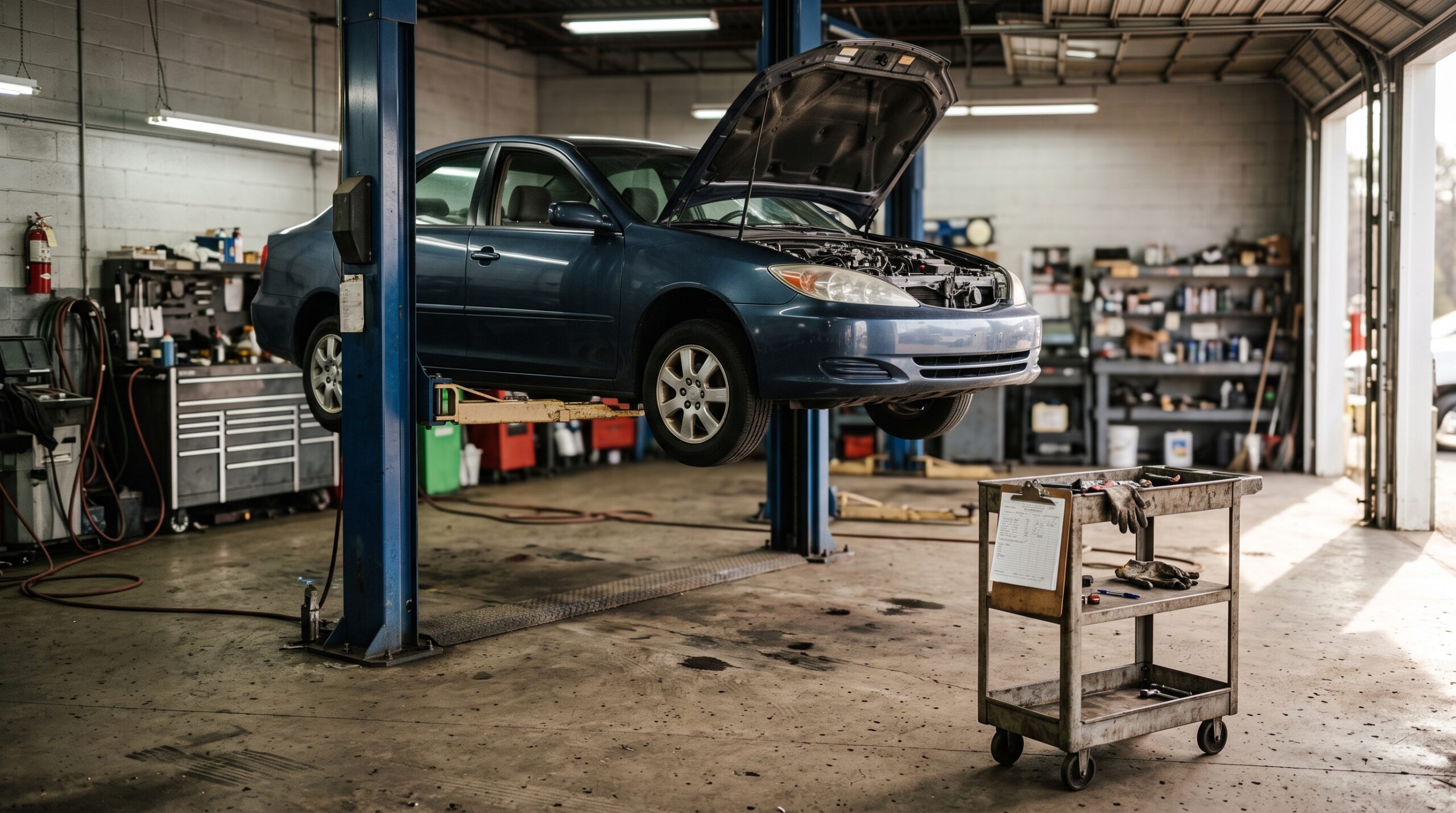
Before any coverage decision happens, someone has to find out what actually failed. California’s Department of Insurance describes that step in detail: for a costly repair, an inspector examines the car, and “you will need to approve a ‘tear down.'” As the same guide explains, “a tear down is a partial disassembly of the area of the car with the problem so the inspector can determine what the exact problem is, and what might have caused the problem.” That authorization happens before the coverage decision, not after.
The same guide states what happens next: “If, after the inspection, the obligor refuses to pay for the repair because the obligor thinks the repair is not covered by the repair agreement, then you will need to pay for the tear down and the repair yourself.” Maryland’s own contract statute confirms the same mechanic from the other side, requiring that “the repair of a malfunction or defect covered under a mechanical repair contract shall include the cost of the teardown and diagnosing” it. Bundled in when covered, billed to you when it isn’t. Before you sign a teardown authorization, ask in writing who pays the labor to disassemble and reassemble the part if the inspector rules against you.
The exclusion is a contract choice, not a legal requirement

Here is the detail most owners never hear: excluding wear and tear isn’t something regulators require. The NAIC’s Service Contracts Model Act, the template many states’ own vehicle-service-contract laws are built from, defines a “service contract” as one covering failure “due to a defect in materials, workmanship or normal wear and tear.” Maryland’s own statute uses nearly identical language. The baseline these models assume is that wear and tear is exactly what the contract is for. A seller that writes “mechanical breakdown only” language into its contract is choosing a narrower promise than the industry’s own model regulation assumes, not following a rule that forces it to.
| Source | What it says | What it means for you |
|---|---|---|
| Federal Trade Commission consumer guide | A “mechanical breakdowns only” contract may not cover normal wear and tear | Ask before buying whether a degrading-but-working part is covered |
| California Department of Insurance | You authorize and often pay for the teardown; a denial leaves the teardown bill with you | Get the payment terms for a denied teardown in writing before you sign |
| NAIC Service Contracts Model Act | Defines a covered contract as including wear-and-tear failures by default | A wear-and-tear exclusion is the seller’s choice, not a regulatory floor |
| Maryland HB 1046 (effective Oct. 1, 2025) | Bars denying a claim solely because the issue matches a manufacturer technical service bulletin | A documented, recent example of regulators responding to a common denial pattern |
A recent state law shows how common the denial pattern got
Maryland didn’t pass a new consumer protection in 2025 for a theoretical problem. Its new statute specifically bars a provider from denying a claim “solely because” the diagnosed issue was previously identified in a manufacturer’s technical service bulletin, a documented pattern the manufacturer has already flagged for that model. Lawmakers only write that specific a rule when the specific pattern is showing up often enough to justify it. Nationally, the cost of the repairs sitting on the other side of these disputes keeps rising too: the Bureau of Labor Statistics’ (BLS) Consumer Price Index for motor vehicle maintenance and repair (series CUUR0000SETD) is up 18.9% since July 2023, which raises what a denied claim, and a denied teardown, actually costs out of pocket. It’s also worth checking what a vehicle service contract actually covers before you buy one, and whether your manufacturer’s own factory coverage already duplicates part of what you’d be paying for.
Frequently asked questions
What’s the difference between “mechanical breakdown” and “wear and tear” in a vehicle service contract? Mechanical breakdown means a part fails suddenly and stops functioning. Wear and tear means a part degrades gradually from normal use. The FTC warns that a contract covering only “mechanical breakdowns” may not pay for wear-and-tear failures, even though wear causes most real-world repairs.
Do I have to pay for the teardown if my claim gets denied? Often, yes. California’s Department of Insurance describes the sequence directly: you authorize a teardown so an inspector can diagnose the problem, and if the inspector decides it’s not covered, you pay for both the teardown and the repair yourself.
Is excluding wear and tear required by law? No. The industry’s own model regulation, the NAIC Service Contracts Model Act, defines a covered service contract as one that includes wear-and-tear failures. Excluding it is a choice individual sellers make in their contract language, not something regulators require.
How do I find out if my contract excludes wear and tear before I buy it? Read the contract’s definitions section for how it defines “breakdown” or “mechanical failure.” If wear and tear isn’t listed as covered, ask directly whether a part that’s degrading but still working would be paid for, and get the answer in writing.
What should I ask before authorizing a teardown? Ask who pays the teardown labor if the inspector rules the failure isn’t covered. Ask this before you sign anything. Once the part is disassembled, you’re committed to the cost either way, regardless of the outcome.