
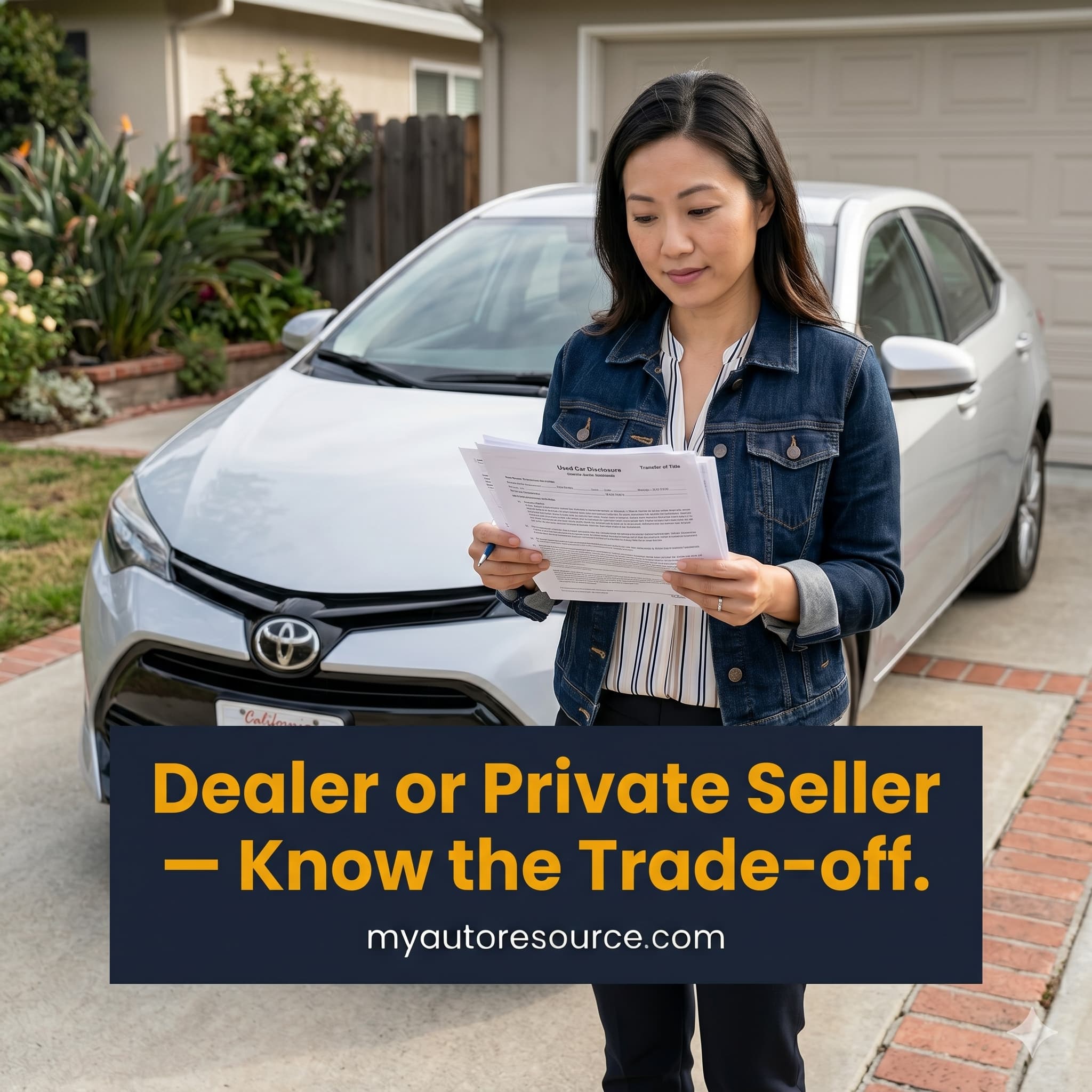

You find the car you want listed by a private seller for $24,400. The same trim is sitting on a dealer lot three miles away for $27,200. The $2,800 gap looks straightforward until you add back everything that makes a dealer transaction easier: financing, paperwork, a warranty, and someone to hold accountable if something goes wrong. In a normal market, most buyers pick dealers for convenience and accept the price premium. In today’s market, where inventory has hit a 7-year low and dealer prices are holding firm, that $2,800 is worth scrutinizing more seriously.
In a market with 37 days of used car supply, dealers have less pressure to negotiate. The private seller price gap — historically 10 to 15% below dealer asking — has become more meaningful, not less.
Why the Calculation Has Shifted in 2026
In a well-supplied market, dealers competed for buyers and often trimmed margins to close deals. With used inventory at its tightest level since 2019, according to Cox Automotive’s March 2026 data, dealers are not hurting for buyers. The vehicle you walk away from will likely sell to someone else within days. That reality reduces negotiating leverage at a dealership and raises the relative appeal of private-party transactions where motivated sellers still exist.
Private sellers — people moving, downsizing, upgrading, or simply done with a vehicle — often price below the market rate because they want a fast, clean transaction. They do not have floor plan costs, reconditioning fees, or overhead to cover. When a dealer prices a used car, a portion of the sticker covers those fixed costs before any profit. When a private seller prices the same car, it is just their ask.
The price gap is real, but so are the tradeoffs. Understanding which side of the ledger matters more for your specific situation is how you make the right call.
What You Give Up With a Private Seller
Three things disappear in a private-party transaction: financing, warranty, and accountability.
Financing: Private sellers do not arrange loans. You need pre-approved financing in place before you go to see the vehicle, which means more legwork upfront. The benefit of getting pre-approved at a credit union or bank before any purchase is real regardless of where you buy — but it is a requirement rather than an option with a private seller.
Warranty: As-is means as-is. If the transmission fails 60 days after you drive off, the cost is yours. For a vehicle with low miles on a reliable make, this risk is manageable. For a higher-mileage vehicle with unknown service history, it is a real financial exposure. We covered the extended warranty decision for used cars — if you go the private seller route, this question becomes more pressing, not less.
Paperwork: Title transfer, registration, and tax filings are your responsibility. The process is manageable but takes time, and errors can create title problems that are expensive to fix after the fact. If you are buying from a seller in another state, the complexity increases further.
What You Give Up With a Dealer
One thing, primarily: money.
Dealer prices on used vehicles are higher than private-party equivalents, typically by 10 to 15% on comparable vehicles. Some of that premium buys real services — financing access, CPO warranties, accountability under consumer protection laws. Some of it is margin. In a tight inventory market, dealers have less reason to negotiate the margin portion away.
Add-on fees compound the gap. Documentation fees, dealer prep charges, and administrative costs can add $500 to $1,500 to the transaction, often presented at the signing stage when the buyer is already committed. Always ask for an out-the-door price before getting invested in a specific vehicle at a dealership.
How to Decide: The Framework
The private seller path makes more sense when:
- The vehicle is from a make with a strong reliability track record and you can verify service history
- You have pre-approved financing and are comfortable handling title paperwork
- You are buying a vehicle where the as-is risk is low — solid CARFAX, independent inspection passed, no red flags
- The price gap is $2,000 or more after accounting for fees on the dealer side
The dealer path makes more sense when:
- You need financing arranged at the point of sale
- You want CPO protection or a dealership warranty
- The vehicle has a complex history and you want consumer protection recourse
- Your time has significant value and handling the paperwork yourself is not worth the savings
The right question is not “dealer or private seller?” It is “what does this specific vehicle’s condition and my specific situation tell me about where the risk lies?” The source matters less than the due diligence you bring to either transaction.
For both paths, VIN-based research is non-negotiable. A clean CARFAX is a floor, not a guarantee, but it eliminates the worst scenarios efficiently. An independent pre-purchase inspection — $100 to $200 — is essential for any private-party purchase and worth doing for dealer vehicles too.
One More Variable: Trade-ins
If you have a vehicle to trade, that changes the equation toward dealers. Dealers handle the trade-in valuation and apply it to your purchase in one transaction. Selling privately before buying privately is two separate processes that need to happen in sequence, which creates timing risk. If your old vehicle needs to sell to fund the new purchase, a dealer trade-in removes that variable.
Questions About Buying From a Private Seller vs. Dealer
- Do I need to be pre-approved for financing before approaching a private seller?
- What paperwork is required when buying a car from a private individual?
- Can I negotiate with a private seller the same way I negotiate with a dealer?
- Is a pre-purchase inspection required for a private-party transaction?
- What recourse do I have if problems appear after a private-seller purchase?
Before you negotiate, know your financing. Compare auto loan rates from top lenders so you walk in with a real number.